
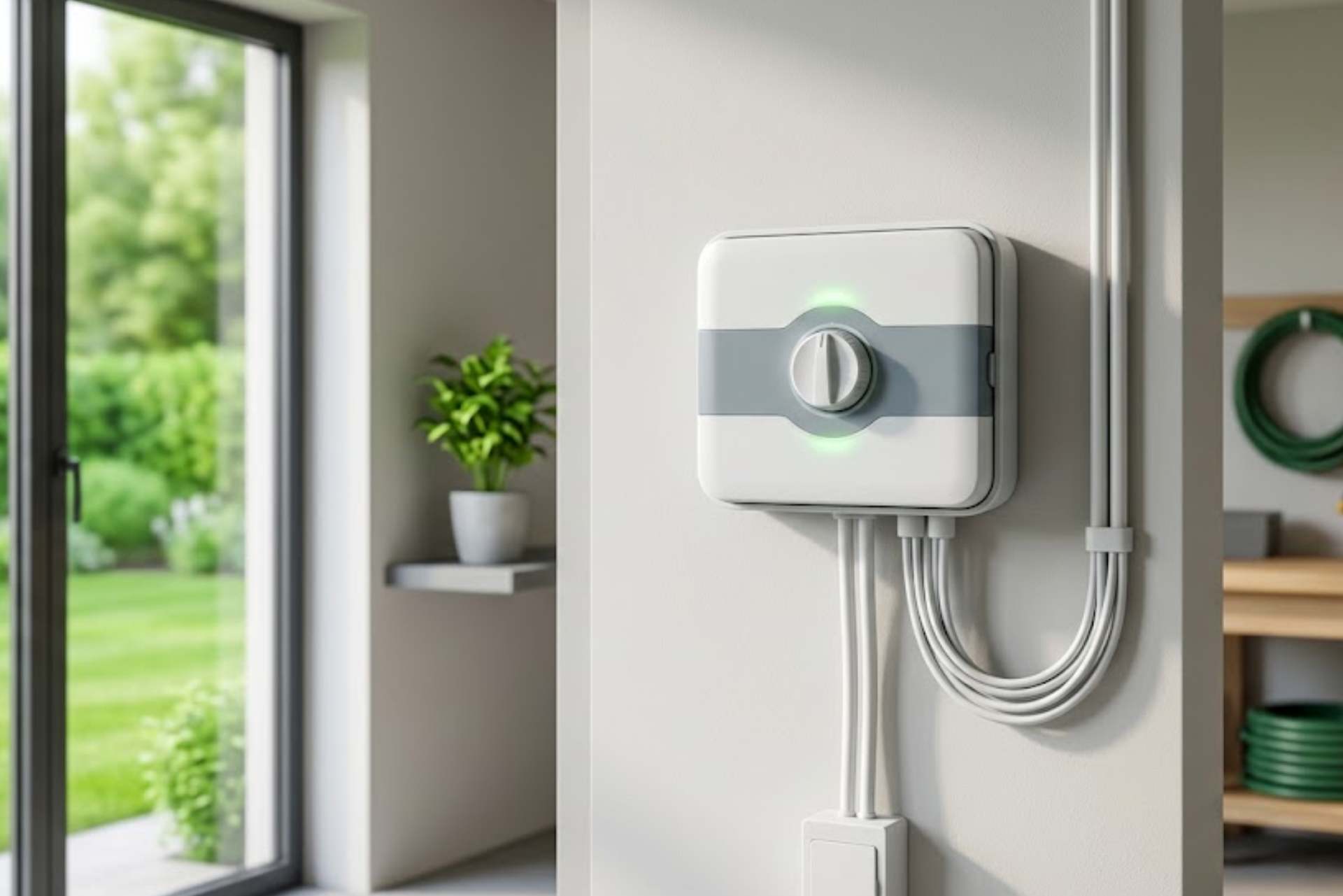
Automatic irrigation saves time by watering your yard on its own, at the best hour, without you lifting a hose. Instead of dragging sprinklers around, standing outside at dawn, or rushing home to water before dark, you set a schedule once and the system does the rest. Smart controllers go further and skip watering after rain, so you never adjust anything by hand. You also stop thinking about the yard when you travel. For busy Central Pennsylvania homeowners, that adds up to hours saved across a growing season and far less to keep track of. This article shows where the time goes now, how automation gives it back, and what the system still needs from you.
How Much Time Does Yard Care Really Take
Yard work is a routine part of running a home, and the numbers back that up. The U.S. Bureau of Labor Statistics tracks this in its American Time Use Survey. In its 2025 results, it found that on an average day, 81 percent of people did some household activity, a category that includes lawn and garden care.
The same survey shows Americans age 15 and over spent an average of 0.19 hours a day on lawn and garden care, with men averaging 0.26 hours. That figure is spread across the whole population, including everyone who did none that day. For the homeowners actually doing the work in season, the real time runs much higher.
Watering is one of the most time-fixed pieces of that work. It cannot wait for a convenient moment, because the best results come from watering at a set time of day. That single fact is where hand watering quietly eats your schedule.
The Real Time Cost of Watering by Hand
Hand watering sounds simple. In practice it pulls at your day in ways that add up fast.
Consider what manual watering actually asks of you:
- Being present on a schedule. Someone has to be home, hose in hand, at the right time.
- Moving equipment around. Sprinklers and hoses get dragged from zone to zone and back.
- Watching the clock. Turn it on, remember to turn it off, or waste water and money.
- Adjusting for weather. Skip a day after rain, add a day in a heat wave, all by guess.
- Covering every area evenly. Miss a corner and you get brown patches that cost time to fix later.
- Finding a fill-in when you leave. A neighbor has to take over the whole routine while you travel.
None of these take long on their own. Stacked across a full Central PA growing season, from spring green-up to fall dormancy, they turn into a standing weekly chore that never quite ends.
Watering Happens at the Best Time Without You
Here is the constraint that makes manual watering so demanding. The ideal watering window is early morning, and few people want to spend it outside.
Cornell University’s College of Agriculture and Life Sciences recommends watering lawns between 4 a.m. and 8 a.m. Watering that early lets the grass dry in the morning sun, which lowers the risk of disease. Penn State Extension adds that deep, less frequent watering builds stronger roots than light daily sprinkling.
Doing that by hand means setting an alarm for dawn. An automatic system runs at 5 a.m. while you sleep, then shuts itself off. You get the healthiest watering time without giving up your morning. That is time and sleep handed straight back to you.
Smart Controllers Skip the Guesswork
A weather-based controller removes the other daily task, which is deciding whether to water at all.
The U.S. Environmental Protection Agency runs the WaterSense program. It reports that replacing a standard clock timer with a WaterSense labeled controller can cut an average home’s irrigation water use by up to 30 percent. That saves up to 15,000 gallons of water a year. These controllers adjust to local weather on their own, watering less when rain is coming and more during dry heat.
The time payoff is that you stop managing the schedule. No running outside to shut off sprinklers during a downpour. No trying to remember whether the lawn was watered. A smart irrigation system makes those small daily decisions for you, all season long.
Your Yard Stays Covered While You Travel
Leaving town used to mean lining up a favor. Someone had to water the yard, and you had to explain the whole routine.
An automatic system erases that errand. It keeps watering on schedule whether you are home or a thousand miles away. Many smart controllers also let you check and change the schedule from a phone app, so you can confirm everything is running from the airport. You come home to a healthy yard instead of brown patches and a replanting project.
Manual Watering Versus Automatic Irrigation
The difference shows up task by task. Here is how a typical watering routine changes once you switch to an automatic irrigation system.
| Watering Task | By Hand | With Automatic Irrigation |
|---|---|---|
| Choosing the time | You must be present at dawn | System runs at the ideal hour on its own |
| Turning it on and off | Manual every session | Fully automated |
| Moving hoses and sprinklers | Repeated for each area | Fixed heads cover every zone |
| Adjusting for rain | You guess and react | Smart controller skips watering itself |
| Even coverage | Easy to miss spots | Designed zones reach the whole yard |
| Travel and vacation | Needs a stand-in | Keeps running with no help |
| Weekly time demand | Recurring and hands-on | Close to none once set |
The pattern is clear. Automation shifts watering from a hands-on chore to a background task you rarely touch.
Time Saved Adds Up Across a Central PA Season
Central Pennsylvania has a long watering season, roughly from spring through early fall. Across those months, a hands-on routine repeats week after week.
Automation collapses that recurring load into a one-time setup. You plan the zones and schedule once, usually with your installer, and the system carries the routine from there. The hours you would have spent watering, moving hoses, and reacting to weather stay yours instead.
Consistency saves a second kind of time, the kind spent fixing problems. Even watering prevents the dry patches, dead spots, and stressed plants that turn into weekend repair jobs. A well-designed irrigation system installation protects your yard from those setbacks before they start. That is why so many homeowners treat professional irrigation services as a time investment, not just a yard upgrade.
What Automation Does Not Do for You
Automatic irrigation saves time, but it is not fully hands-off. Being honest about this helps you plan.
Your system still needs a little seasonal attention:
- Spring startup. The system needs to be turned on and checked for winter damage each spring.
- A few schedule tweaks. Watering times may shift as the season moves from cool spring to peak summer.
- Fall winterization. Central PA freezes demand that the lines be drained before the first hard freeze, or pipes can crack.
The good part is that these are occasional tasks, not weekly ones, and a service plan can handle them for you. Scheduled seasonal irrigation service turns even that short list into something you do not have to remember. The day-to-day watering, the part that used to fill your mornings, is off your plate for good.
Final Thoughts
Automatic irrigation gives Central Pennsylvania homeowners their time back by taking over the one yard task that demands the most of it. It waters at the healthiest early hour without an alarm and skips watering after rain on its own. It keeps the yard alive while you travel and prevents the brown patches that eat future weekends. The Bureau of Labor Statistics shows yard care is a near-daily part of home life, and watering is the piece automation removes most completely.
If you are ready to stop watering by hand, Evergreen Contracting & Irrigation can help. The team designs and installs automatic systems for homes across Central Pennsylvania, then keeps them running season to season. Reach out to request a free estimate and get your mornings back.